Partners for Parks Pitches In at Lincoln Heights Community Garden
We all know fall is that time of year when we take a break from the sunshine and extra-long (and fun!) days of summer to spruce up our yards and get them ready for winter. Whether you’re raking leaves, mulching gardens, or planting spring bulbs, the extra effort keeps your surroundings looking good year after year.
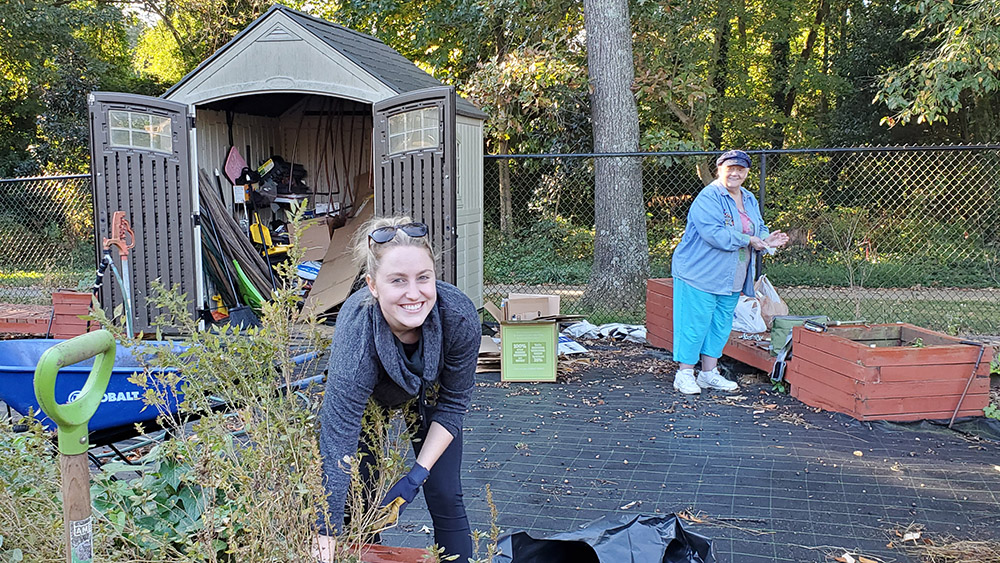
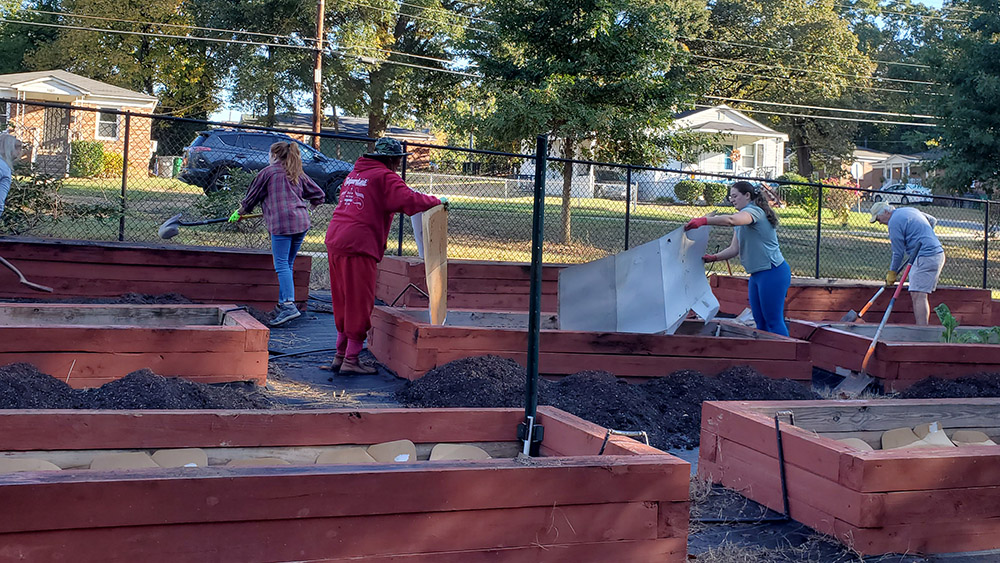
Our parks are no different. They need some love, and Partners for Parks is chipping in with extra hands to make light work in a park on Charlotte’s west side. They’ve spent three Saturdays with neighborhood volunteers to weed and mulch gardens at Lincoln Heights Park.
“Through the Lincoln Heights community, we learned the ladies who run the community garden needed help winterizing it,” says Emily Condon, Secretary of the Partners for Parks Executive Board. “We rounded up volunteers and weeded the gardens. The County brought in soil and tools, and we topped off gardens and placed cardboard on top to keep out the weeds.” Placing drip lines on top of the cardboard made them easy to access for growing in the spring.
Reaching out and creating relationships in underserved communities is Partners for Parks’ continuing mission as park equity is revealed as part of a larger equity conversation. The garden cleanup partnership was conceived as one of many events on the west side because of relationships formed with west Charlotte communities this year.
“We want to make sure Partners for Parks has a meaningful impact in the community through parks and open space,” says Beth Poovey, President of Partners for Parks’ Board of Directors. “It has always been important for Partners for Parks to ensure that we meet the needs of our community, especially communities of high need, and improve access to quality park space. We are working with these communities more to find out how we can help with their needs for park and rec and open space.”
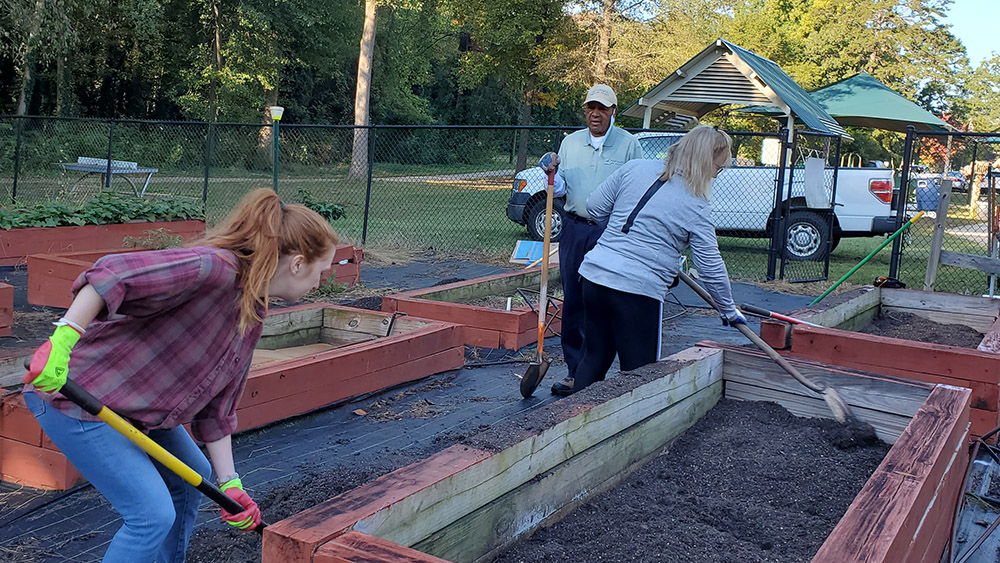
During a backpack giveaway at the park in August, Partners for Parks Board Members noticed the community gardens were overgrown. They met with the neighborhood association president, Thelma Byers-Bailey, and learned that neighbors could use some help with the beds. Their inquiry led to the workdays that cleaned up the gardens!
“It feels great. It's a great way to spend a Saturday morning, improving a public space and helping a community that wants to improve their area,” says Condon. “The relationships we’re forming as we help them are a lot of fun.”
This project is a good example of the relationships Partners for Parks is forming with west side neighborhoods to benefit parks and communities. Our vision is: To Breathe Life Into Our Community and Parks Build Community.

Mecklenburg County Cuts Official Opening Ribbon on Stevens Creek Nature Center
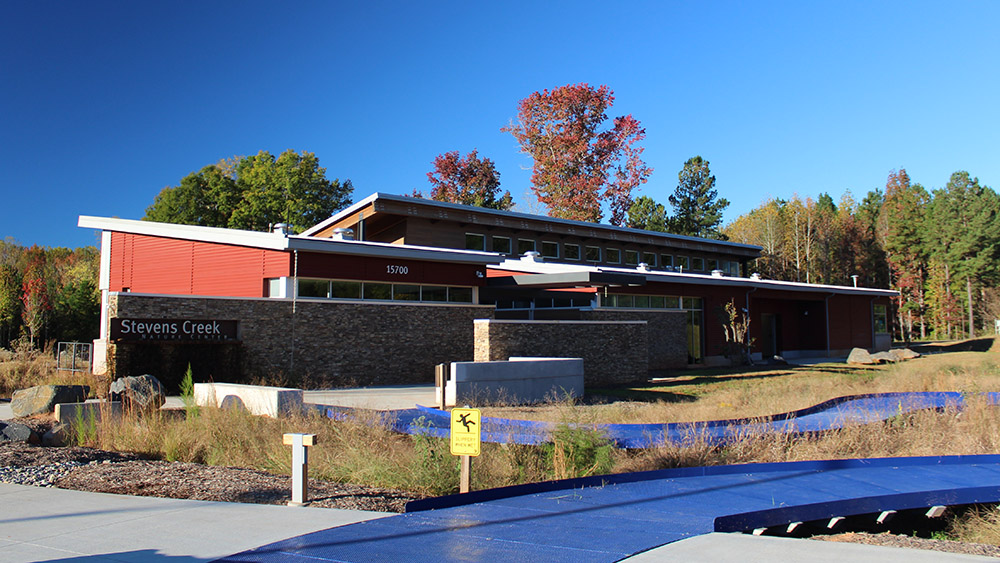
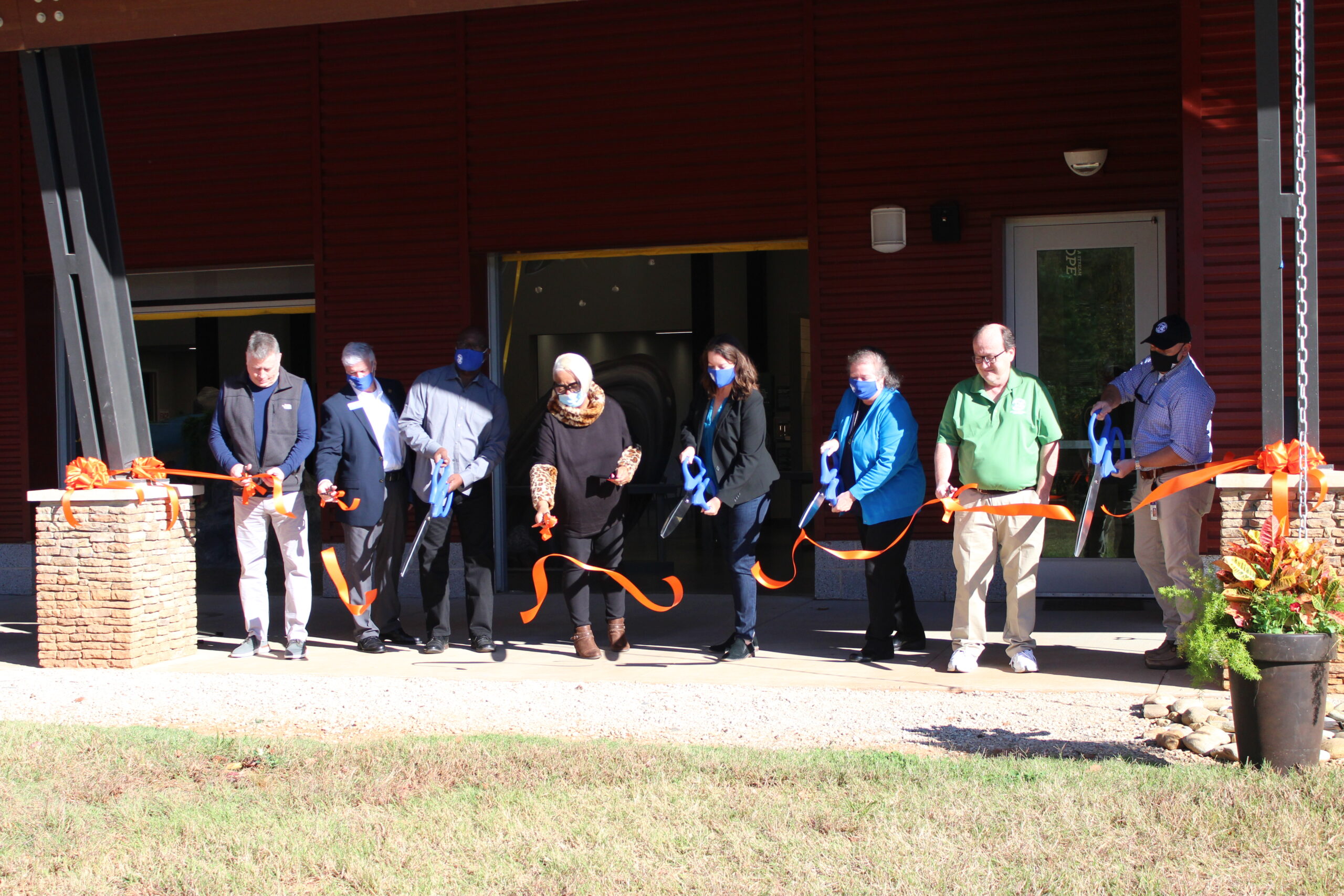
After a year of COVID-related delays, Stevens Creek Nature Center is officially open to the public! We introduced you to the water-focused nature center when it was originally scheduled to open in October 2020.
The nature-centric educational facility is built on 275 acres off Thompson Road in Mint Hill that includes the Stevens Creek watershed. The adjoining nature preserve will protect the native habitat that was once -- and might once again be -- home to the rare Carolina Heelsplitter Mussel.
Board of Directors Vice President Brad Chambers attended the long-awaited ribbon-cutting on behalf of Partners for Parks. Enjoy the photos he took of the celebration!

Around the Crown 10k Completes Another Loop for Partners for Parks
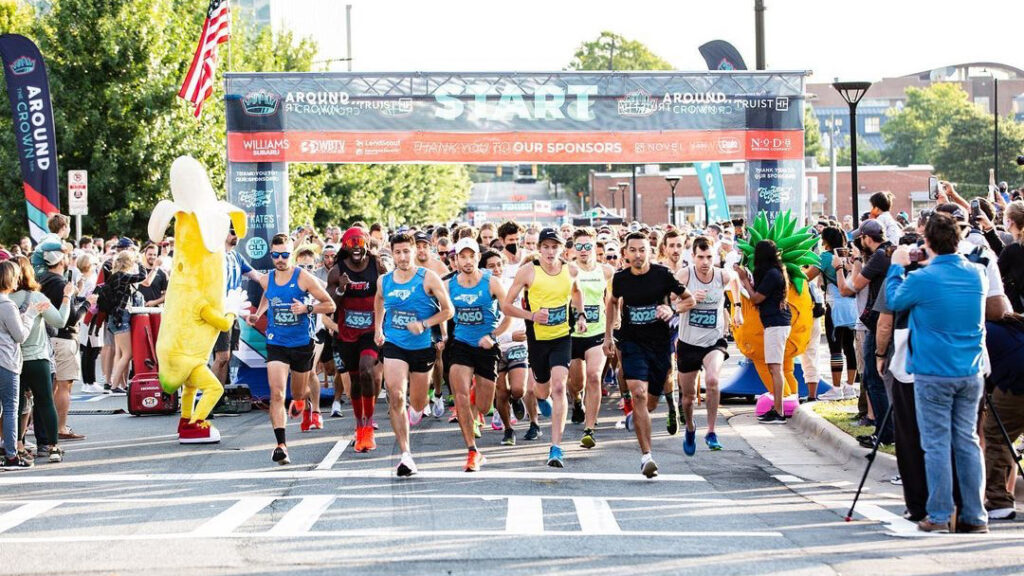
After more than a year full of delays and transitions, and hopes and fears of “when” or “if” it could actually happen, Around the Crown 10k returned for its second epic run on I-277 around uptown Charlotte. The landmark race supports Partners for Parks as its main beneficiary.
Just over 4,000 runners took part, either in person or virtually, in the 2nd-ever road race, including nearly 1,200 who signed up in the last month when the race was confirmed to be a “go.”
“It was a roller coaster of a year,” says Race Director Brian Mister. “All things considered, it went well.” The number of runners was still 80-85% of the previous race, which thrilled Mister in a year when entries into a lot of races are down significantly.
This year’s Around the Crown 10k offered a new starting time and start & finish line, too. Runners could sleep in 1 hour longer before the 8 a.m. start, and launched from First Ward Park in uptown, which allowed for a more precise route and better access outside the hustle and bustle of football crowds near Bank of America Stadium.
“It was nice being in First Ward Park with light rail right there, 7th Street Public Market, a splash pad, Children’s Theatre, and digital screens,” says Mister. “The screens could hold images of sponsor logos, beneficiaries, and good luck messages.”

The route changed slightly, too, after Mister discovered that overpasses add a little “bump” in mileage on Strava. An extra block added to the route in South End accommodated the difference for a more-precise 6.22 miles. The new course ran approximately 2 miles inside uptown, 3 miles on the highway, and 1 mile inside uptown again, to finish up North Tryon Street.
Runners were treated to views of uptown Charlotte’s 3 sports stadiums -- for the Panthers, the Hornets, and the Knights -- and one additional perk they could appreciate:
“They got a major hill out of the way early,” laughed Mister. Amazing weather rounded out a perfect race day.
A day earlier, the Around the Crown 10k Expo at Camp North End allowed runners to soak up the vibe of the race before lacing up their shoes. Besides packet pick-up, Tosco Music Party and 3 other bands entertained the crowds, who could browse more than 2 dozen vendors. More than 100 kids ran a .277-mile race around the Ford Building, securing their own official race T-shirt and medal for the effort.
Charlotte marathoner Paula Pridgen won the women’s race, while Nathanael Williams of Lancaster, SC, was the men’s winner (and his wife placed 3rd for women, too!) Both winners set new ATC10k records with their times.
In addition to the overall race winners, winners were also named for segments of the race, including that hill on I-277 that runners often dread, and the entire I-277 loop. Prizes were given away for the 277th finisher and the 1,277th finisher, and four winners were randomly selected to take home a pair of Brooks running shoes. Cheers!
But once again, the big winners (besides Charlotte’s awesomeness!) were the beneficiaries of money raised by the landmark road race. More than $25,000 was split between several non-profits, with the largest share going to Partners for Parks. RunningWorks, Carolina Farm Trust, Miles for Music, Roof Above Ministries, and the Humane Society also took home a share.
In true fashion, Mister is already planning for next year’s start, tentatively scheduled for 7:30 a.m. on September 4th, 2022.
“The goal for next year is 6500-7000 entries,” he says. “We’re proving we can still host races and do it safely.” And there’s one more thing he’d like to do next time around, too --
“Next time, I want the finish line party to be bigger!”
2021 Projects
In 2021, Partners for Parks has doubled down on its commitment to equity and access in the region’s parks. We have actively looked for ways to be a bigger advocate in underserved communities, and we are just getting started as more opportunities for partnerships reveal themselves as we reach out to these communities. Here are a few of our best events from the year, and know you will support our outreach even more next year as we watch all of our parks Breathe Life Into Our Community.
Parks and Charlotte’s West Side
Partners for Parks has developed an opportunity with the Knight Foundation, Smart Growth America, City of Charlotte Urban Design Center, and Mecklenburg County Park and Recreation to create a groundbreaking new partnership. Together, we will work to leverage lessons learned during the pandemic about the vital importance of public open space and equity in access, to create quality vibrant parks for all. These conversations have helped Partners for Parks focus on building relationships on Charlotte’s west side. We look forward to growing our support to these communities as a group and creating a model for future outreach. Our goal going forward in this partnership will focus on improving access and vibrancy through parks to build more connected communities.
Back-to-School Backpacks
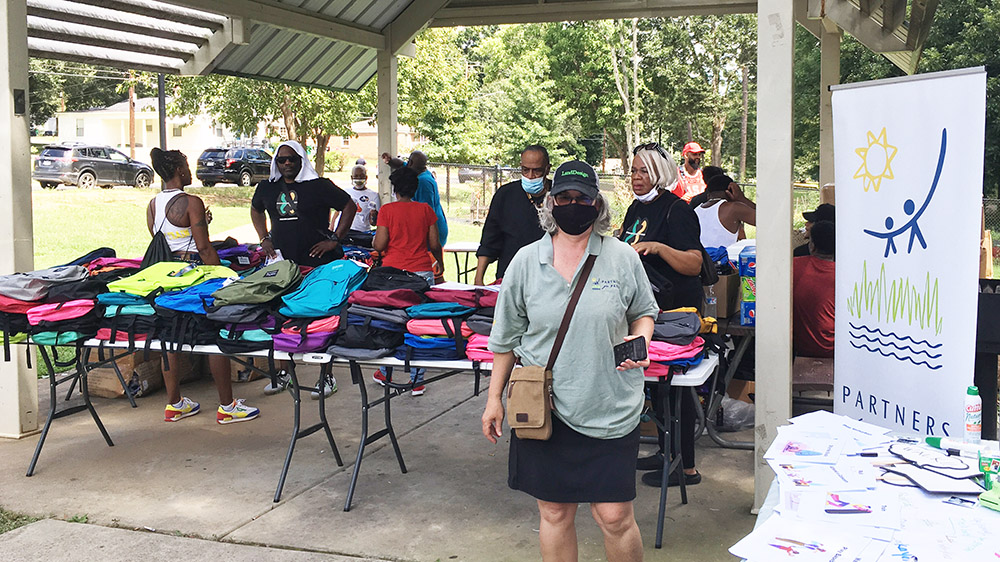
Partners for Parks stepped up our commitment to equitable access to parks for all of Charlotte and Mecklenburg County by partnering with the United Council for Change, Anthony Hamilton, and No Limit Larry during a back-to-school backpack giveaway in Lincoln Heights Park in August. Partners for Parks donated 400 backpacks for the event. While hundreds of children received free book bags, school supplies, and even Partners for Play footballs to toss around at the party-in-the-park, Partners for Parks listened to residents voice how neighborhood parks can best provide value to their lives. The event reinforced the importance of Lincoln Heights Park as an active gathering place for the community.
Summer, Summer, Summerstock
Hundreds came outdoors to play, take in art, and listen to music, as Partners for Parks celebrated summer with the nonprofit Health Empowerment Renewal (H.E.R.) during “Summerstock Charlotte” at Camp Greene Park in June. Board members engaged residents about the value and need for high-quality park improvements while handing out jump ropes and frisbees from the renovated basketball courts that Partners for Parks helped facilitate with grants from Lowe’s Home Improvement and the Charlotte Hornets. It was a fun, family-friendly event that celebrated an improved, more vibrant westside park.
Let the Sunshine In!
A fun neighborhood event makes the most of sunny days with a demonstration event showing the power of solar. Partners for Parks actively works as a liaison between westside community groups and Mecklenburg County Park & Recreation Department to bring more activities like the Solar Demonstration Event to west Charlotte park users. For the Solar Demonstration, Partners for Parks provided logistical help to the United Council for Change to show neighbors and students how solar panels can power household appliances like a microwave and a blender, and create cleaner energy and utility cost savings.

ProCamps and Play
Partners for Parks strives to help kids be active and healthy as they grow and thrive through play. Partners for Parks has provided scholarships for hundreds of football campers in the Charlotte region over the past 10 years through our partnership with ProCamps and a third party, the Garth Brooks Foundation. This year five recipients -- boys and girls grades 1-8 -- received scholarships at the DJ Moore Youth Football ProCamp in June, where they were able to play while running, jumping, throwing, and catching a football.
On the Horizon
Park Cleanups at Lincoln Heights Park, to spruce up the landscape and prepare beds at the community gardens for winter Partnerships to continue to work with city and county staff, the Knight Foundation, and Smart Growth America to improve open space opportunities in the community Please consider continuing as an Annual Sponsor, or joining us if you haven’t already, as we Breathe Life Into Our Community through our support of local parks.
Partners for Parks Annual Fundraising
We are having another great year at Partners for Parks, as our neighbors seek the natural beauty of our parks and recreation centers for a safe way to recharge their lives with both peace and activity. Nature Centers have fully opened after a long year of limited programming, and we’re reaching underserved areas of Mecklenburg County with new partnerships and activities to increase equity and access to parks in those areas! We are excited that we have added four new members to our Partners for Parks Board, and see new perspectives as we reach out and enhance parks to build community across Mecklenburg County and the region. It is on this bold path that Partners for Parks is kicking off our Annual Sponsorship Campaign. We need your help by continuing your Annual Sponsorship or becoming an Annual Sponsor. Due to the continuing COVID pandemic, we regret that we will not be able to hold our Annual Sponsors and Award Celebration in 2021 - so we need your help more than ever to continue our partnership with Mecklenburg County and the surrounding region to Breathe Life Into Our Community. We believe Parks Build Community and with your help, we can continue to make a difference in Mecklenburg County and the surrounding region. As we’ve seen from the increased park use during the COVID pandemic, parks are more important than ever - and your support makes a difference. Please continue your support with an Annual Sponsorship, or become a new Annual Sponsor if you haven’t joined us already. Annual Sponsorship levels are as follows:
-
- Presenting Annual Sponsor - $5,000 or more
- Sustaining Annual Sponsor - $2,500
- Premier Annual Sponsor - $1,000
- Patron Annual Sponsor - $500
- Donor Annual Sponsor - $250
- Friend of Partners for Parks - $100
Annual Sponsors will be recognized on our website for the next year. Thank you for your partnership in the past. We hope you’ll help us continue to support parks and recreation throughout Mecklenburg County and the surrounding region. With your help, we can Breathe Life Into Our Community.
“Quest” for Nature Education Brings New Center at Latta Preserve
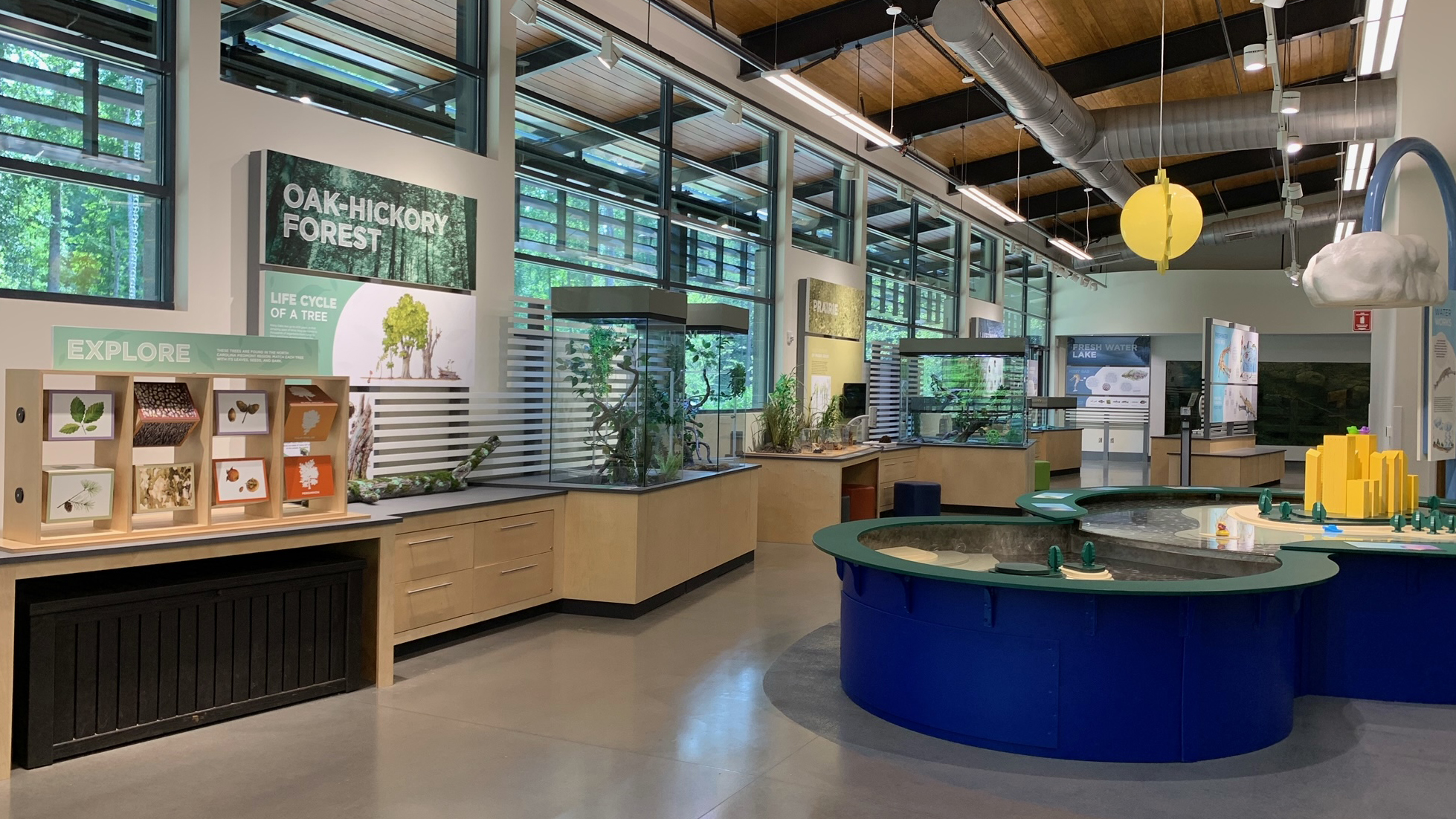
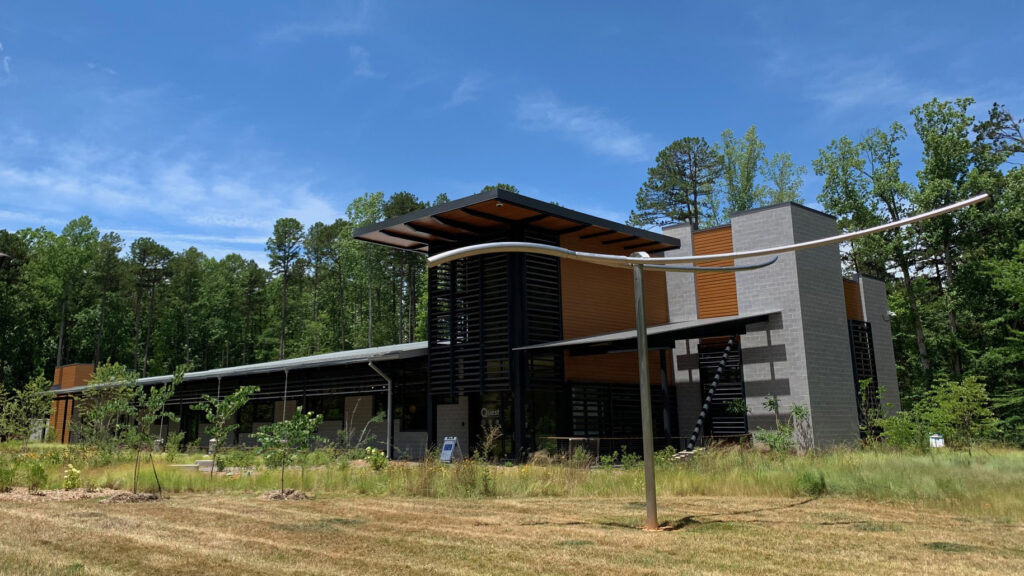
Journey into the world of water at Mecklenburg County’s newest nature center, aptly named Quest, as the county’s nature centers open their doors full-time on September 7th. The brand new, 13,000-square-foot education center is a long time in the making.
“Quest is a whole new building -- exhibits, program animals, education, programs -- all there,” says Alice Chambers, Environmental Education Manager for Mecklenburg County Park & Recreation. “It’s a brand new nature center -- but it’s more than a nature center.” Quest will be the new “front door” to the 1,460 acres of Latta Nature Preserve, which offers 16 miles of trails, native animal and plant species, and kayak and equestrian areas adjacent to Mountain Island Lake.
If you’re familiar with the old facility at Latta Preserve, Quest will be quite an upgrade. The former nature center called a 40-year-old ranger center home and lacked classrooms, adequate office space, and enough bathrooms (just one!)
“It was beyond its useful life,” remarks Chambers.
The new $8 million center has been a long time in planning. Funds to build it were part of the 2008 county bond referendum, which was delayed because of the economic recession. A revived economy and fundraising campaign brought plans for Quest back to life, along with a new Raptor Center facility.
COVID once again delayed the opening of the new facility, which was completed in December of 2019, but the nature center’s staff was able to move into the building and run summer camps in 2020 and 2021. The nature center portion of the building then opened on weekends in July, along with an expanded gift shop.
The Raptor Center is a partner in the new facility, with an expanded hospital and new Raptor Trail coming adjacent to the building.
“This is joint programming between Nature Center and Raptor Center,” says Chambers. “You can learn about hawks in the classroom, and then go out on the trail and see them.”
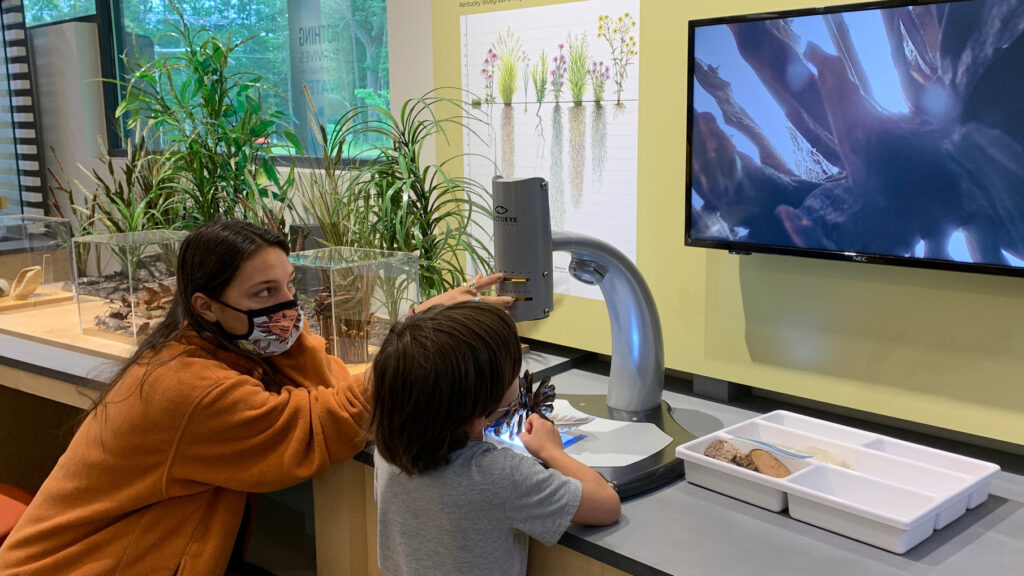
When visitors walk into the new Quest Nature Center, they’ll explore a world of water. And while Stevens Creek Nature Center in Mint Hill (also opening full-time September 7) explores the watershed that surrounds us -- native creeks, streams, and habitats -- Quest offers a zoomed-out view of the planet's water ecosystem.
“It’s a bigger picture that nothing can survive without water -- where does it come from, where does it go, what is groundwater, how water is used,” explains Chambers. “It’s still a water quality focus, though, because nothing survives without clean water.”
Exhibits detail a water cycle that shows our water is a continuous cycle of life. Water rains on the city runs off into the lake, evaporates into clouds, and becomes rain again. It’s a good reminder that water is neither created nor destroyed, but must be clean in order to be used as a resource.
“It’s all about appreciation for water, when you turn on the tap it comes from somewhere,” Chambers reminds us. “It may have been drunk by a dinosaur, or been in a tree.” Tell that to your preschooler!
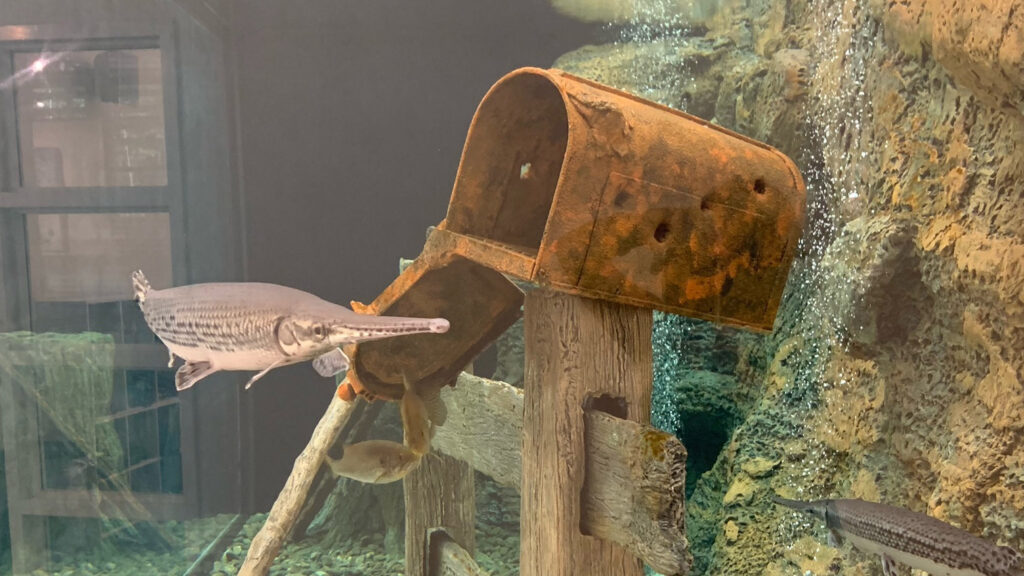
After learning about local watersheds like woodland, prairie, lakeshore, and lake, visitors are treated to a look under the water’s surface right outside their door, in Mountain Island Lake. A 6,000-gallon tank, designed to look like “a big section of water out of Mountain Island Lake,” describes what you’d see in a deep dive underwater - both natural and manmade. Snakes, turtles, frogs, and fish thrive next to human-created trash and debris on the lake’s bottom.
And yes, Mountain Island Lake is where Mecklenburg County gets its drinking water.
There is a lot to explore at the new Quest Nature Center and adjacent Raptor Center, says Chambers. Educators can’t wait to show you!
“It has been a long time coming!” she says. “We are thrilled to have people back in the building.”
Plan your visit to Quest at Latta Preserve: https://www.thisisquest.org/
Partners for Parks Partners for Change in Lincoln Heights
On a hot day in August, no kid wants to think about going back to school. Yet hundreds of children came to Lincoln Heights Park on Saturday, August 21st, to get free bookbags, school supplies, and some footballs to toss around on the last few days of summer.
Partners for Parks eagerly partnered with United Council for Change to give away 1,000 backpacks to school children from the nearby Lincoln Heights community; Power 98’s NoLimit Larry and Anthony Hamilton joined in as co-sponsors to make the day of fun and school goodies a true community event.
The giveaway was spearheaded by United Council for Change as one of its monthly events to bring neighbors together for a safer and healthier Beatties Ford Road corridor. UCFC Founder Blanche Penn says Partners for Parks jumped in with a donation of 400 backpacks after President Beth Poovey came to one of their Monday meetings and loved the idea.
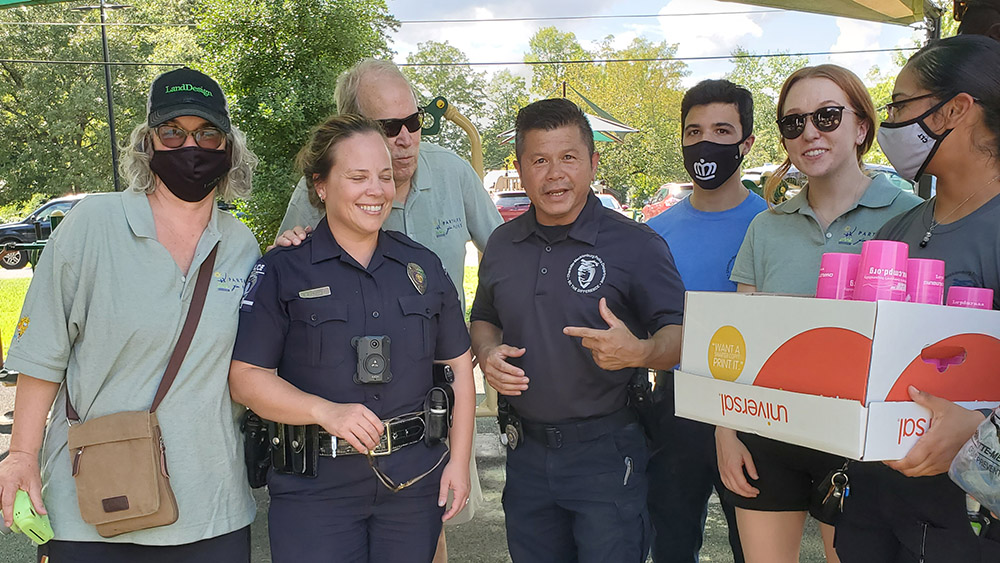
“We’re really thankful and appreciate what they did to get involved,” says Penn, a constant presence for change on Charlotte’s west side. She praised Partners for Parks’ efforts to smooth out details working with the Mecklenburg County Parks and Recreation Team for the big giveaway, and for Partners for Parks Board Members for turning out and sharing the day with UCFC.
“It’s been a fantastic role on this, and we appreciate it,” says Penn. “By Partners for Parks getting involved, it adds to the equity piece of our efforts, and partnerships add more flavor to what we’re doing.”
Partners for Parks Treasurer Al Brown says the Partners want to be active in creating equitable access to parks for all of the Charlotte and Mecklenburg County communities.
“West Charlotte neighborhoods are underserved and in need of parks and support,” says Brown. In that regard, the Board Members talked to neighbors to find out how our parks and park programs can better serve them.
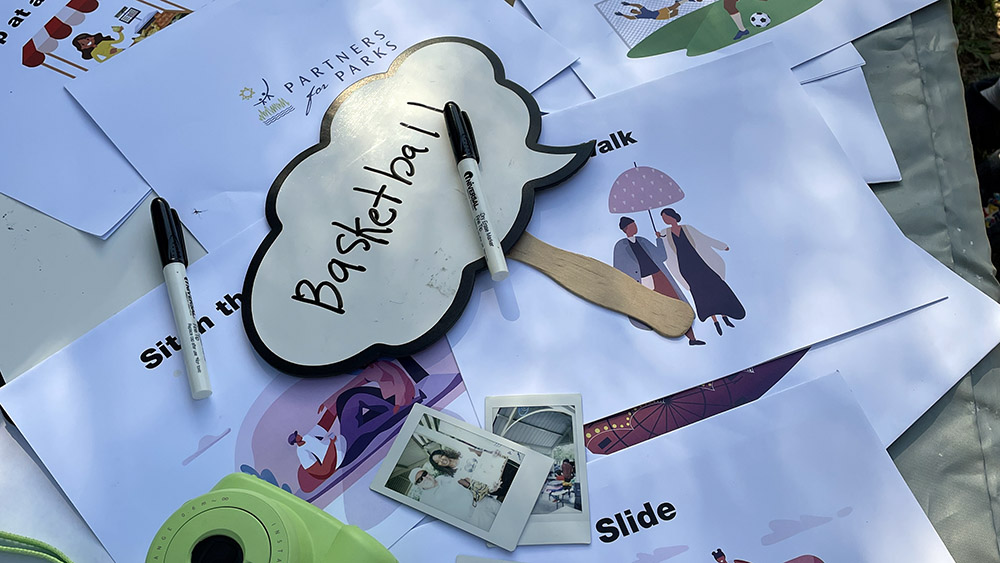
“Our presence was for awareness,” says Brown. “We asked how folks enjoyed parks, what they like doing, and what they would want to do more of.” Partners for Play (an affiliate of Partners for Parks who focus on Play) also joined the fun by giving away small footballs and T-shirts to kids who attended this FUN Saturday afternoon event.
Lincoln Heights Park is a centerpiece for the community off Catherine Simmons Avenue, just across Beatties Ford Road from the West Charlotte High School campus. The 9.2-acre park opened in 2011 with a playground, community garden, and walking trails. The National Recreation and Park Association National Conference in Charlotte in 2014 led to significant additions, as vendors donated to a community build for Lincoln Heights Park as part of its Parks Build Community mission.
The centrally-located green space is a local treasure and the perfect place for Partners for Parks’ mission of Breathing Life into Our Community on the west side of Charlotte.
“It’s a wonderful community that’s been a part of Charlotte for a long time and a very nice neighborhood park,” says Brown. “We’re honored to be a partner with the United Council for Change in this event which supported this westside neighborhood. It was fun and productive and really helped the kids in these neighborhoods.”
New Memorial Stadium Breathes New Life into an Old, Treasured Landmark
A treasured Charlotte landmark is opening its doors once again, 85 years after it first welcomed the community to come together and celebrate its recovery. American Legion Memorial Stadium, originally built in 1936, has been torn to the ground and rebuilt on-site -- and is already hosting crowds and the sports they love. When our nation was trying to dig itself out of the Great Depression, the Public Works Administration put men to work building the original Memorial Stadium on what is now Charlottetown Avenue outside of Uptown. President Franklin Roosevelt spoke at the grand opening; hundreds of thousands of people have come through its gates in the years since. The stadium’s replacement, with an expanded footprint, is ready to host hundreds of thousands more, including its most memorable sport: high school football. “This is a designated historic site through the Charlotte-Mecklenburg Historic Landmarks Commission,” says Bert Lynn, Capital Planning Division Director for Mecklenburg County Park and Recreation. “We worked with them early in the design process to make sure the character of the stadium -- the buildings, the horseshoe shape of the field, the stone wall -- were all part of the new facility and harkened back to the original field as much as possible.”
Want to read about the stadium’s origins? Read the 2003 Historic Landmarks petition here.
One of the most striking and memorable features of the stadium has returned -- the rock wall surrounding the field. The wall and field actually pre-date the stadium seating, so preserving it was integral to the renovation. The wall is constructed a little differently now, too, but it’s made of the same “native rocks” used 85 years ago. “One of the first things contractors did before demolition was come in and remove the stone wall piece by piece, clean them up, pallet them, and store them offsite,” says Lynn. “It was put back in such a way that we won’t have the erosion issues we had over time.” The old wall was stacked stone with mortar holding the rocks together, and water got trapped behind it over time and caused parts of the structure to erode. The new wall is made of concrete with stones covering the front. There were plenty of rocks left, says Lynn, and you’ll see them in walls around other parts of the stadium. The original ticket offices, bathrooms, concessions, and press box have been torn down and rebuilt as well, following strict designs in the style of the original buildings on the site. “We coordinated with the Historic Landmarks Commission to approve the look,” says Lynn. “We wanted it to be as true to the original buildings in the stadium as possible.” Thirteen new buildings ring the stadium in all, including new security offices, concessions, first aid, and bathrooms that -- I know you’ll cheer -- meet code. That means -- wait, there’s more -- there are more women’s toilets than men’s. Yes, that’s in the code. But we digress.
One thing you’re sure to notice when you come to the front gate of the new Memorial Stadium is that Armory Drive, at the “top” of the horseshoe, is gone. In its place is a front walkway landscaped with the familiar rock walls (using those extra rocks), and an eye-popping piece of artwork paying tribute to the men and women of the armed forces. The laser-cut steel panels by artists Simon Donovan and Ben Olmstead project a 3-D look at World War I veterans, the stadium’s original honorees. Named “Tribute,” the relief-style art comes to life as patrons move from one side to the other. It recognizes that honoring veterans was an essential part of the stadium’s original name. “It’s in recognition of the work the American Legion does after conflicts, after our veterans come home and acclimate to life,” says Lynn. “It was absolutely important. It was actually part of the contract with the County Commission that this would always remain American Legion Memorial Stadium.” The front entrance walkway is parallel to Charlottetown Avenue (formerly Independence Blvd., for us old-timers). A tunnel under the road still connects the front of the stadium to Independence Park across the street, as the playing field inside the stadium was originally built in 1935 to be part of the park. Both venues are easily accessible by bus, streetcar, or greenway links. With the ticket offices moved forward towards Charlottetown Avenue, a large concourse opens up inside the front gate. For some events, says Lynn, it will be a social area. For others, it will host VIP and special occasion tents. A short wall separates the entry concourse from the social areas, which are covered in artificial turf and include barstool seating and a narrow ledge overlooking the field. “What we wanted to do is incorporate as many areas as possible to give fans a different viewpoint or different experience” depending on the event, says Lynn.
And speaking of the concourse -- it’s one level all the way around. The old stadium contained different grades as new areas were added over time, and the result was not ADA accessible in a lot of ways. Now the concourse is one big sidewalk that is even with the street level, so yes, the field is technically below grade. This is interesting for another reason: The original Memorial Stadium & field were built around a small creek, taking advantage of the natural slope. If you take a closer look at the vintage photos lining the walls of the concourse, you’ll see the slopes under the seating were full of SAND, not the clunky red clay we’re used to. Once the field and wall were built in 1935, it was basically unusable as a stadium, prompting Charlotte leaders to petition the federal government for WPA funds to build stadium seating. The concourse also includes small alcoves for food vendors to supplement concessions during games. These alcoves have electrical and internet hookups to make doing business easier; and for limited occasions, food trucks will add to the offerings. Three types of seating will be offered in the new stadium depending on ticket prices: Fold down chairs with seatbacks for premium seats, bleachers with backs outside of that, and bleachers without backs in the end zone. VIP seating will be offered on the field for some engagements. Which brings us to the star of the show: the field. It’s big enough for soccer but can also accommodate football, rugby, and lacrosse. And it’s artificial TURF, not natural grass. “Natural turf provides a limitation on how many events you can have on it before you have to go in and replace the sod,” says Lynn. “That’s not something we typically have in our budgets. We like to keep our prices low so we can program the venue as much as possible.” Turf allows the stadium to maximize the number of games and concerts it can hold. The lines painted on the turf are “scrubbed” off by special equipment when the game needs to change. And if you get down on your hands and knees and look closely, you’ll notice light fill similar to wood shavings between the blades of plastic grass. “It’s organic field material made from pine,” says Lynn. “It’s a little less hot than the crumb rubber is.” The field has also shifted towards Charlottetown Avenue to accommodate a new concrete pad for a stage under the scoreboard. Trucks can bring in a stage and equipment from the service drive behind the Grady Cole Center, without ever having to drive on the field. Stadium designers invited the public to weigh in on the new design, and actively solicited old stories to capture the heart of the Charlotte landmark. Even Lynn remembers traveling to Charlotte from South Carolina when he was a kid to watch the Shrine Bowl. Eighty years and thousands of local memories later, the new American Legion Memorial Stadium is ready for more. Lynn sums up his awe of what’s risen on the historic site. “It’s fantastic, I love it,” he says. “We built the stadium very well. It should stand another 80 years for sure.” Want to go? Enjoy the Charlotte Independence Soccer games High school football games at Memorial Stadium, via Charlotte Kickoff Night

Wilmore Centennial Park Brings Neighborhoods Together Along West Boulevard
Growth is exploding in Wilmore, South End, and LoSo, and now the popular area is getting another important attraction with its very own park. Wilmore neighbors will cut the ribbon soon on Wilmore Centennial Park at South End.
“It’s going to be a jewel for South End,” says Kevin Brickman, a Senior Planner for Mecklenburg County Park and Recreation. “We knew this was an area that could use a public green space.”
The park will offer a welcome respite to the hustle and bustle of new offices and apartments springing up along South Tryon Street and West Boulevard. It occupies the block bounded by South Tryon Street, West Boulevard, Hawkins Street, and West Kingston Avenue - across S. Tryon from the country’s first Bojangle’s on West Boulevard, if you need a landmark.
The 1.4-acre space is situated in the north-facing half of the block for a skyline view, while the southern half will welcome The Square at South End along West Boulevard. A grand oval lawn is terraced to be an informal amphitheater with a space for a stage, encircled by 1,000 feet of concrete sidewalks. A kids’ play area has artificial turf and natural features for play, while seating areas with tables allow a place to grab a bite to eat. Kingston Avenue, on the park’s northern border, has parallel parking spots ideal for food trucks and events.
And yes, your leashed doggo is allowed to play there, too. In fact, in order to avoid the ‘dog waste’ problem currently plaguing other uptown parks, Fido will have his own spaces to ‘go.’ Literally named Dog “Go Zones,” two areas of decomposed granite will give dogs a space to do their business before entering the park. Planners hope the designated areas will help keep grass and trees growing while giving their humans a clean place to relax.
The park may be new, but it wraps up more than a decade of collaboration by planners and the block’s Wilmore neighbors. Park planners began assembling parcels of land and tearing down the houses that were there 10-12 years ago, says Brickman. The site, part of which was donated by the Historic Wilmore Neighborhood, was cleared by 2012 and waiting for the next step.
The location was a great stroke of foresight, considering the explosion in development around it in just the last few years.
“Timing-wise it was perfect, and the location was perfect,” says Brickman. “To be at that part of town, we knew it would change -- and now you can see what’s going on.”
Collaboration with neighbors was key. Mecklenburg Park & Rec held two community input meetings in December 2019 and January 2020 to hear what features they wanted. Residents were each given 5 “dollars” to “spend” on features they wanted in the park. More expensive items cost more, and participants got the opportunity to drop their bills into buckets for each option. The amphitheater, seating areas, and playground all scored high.
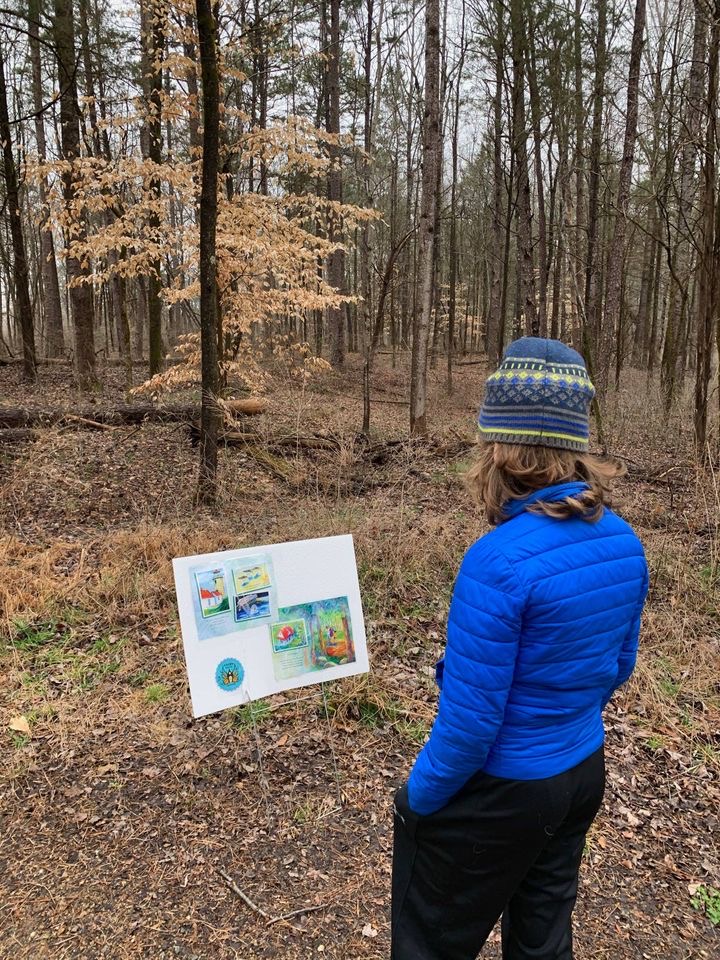
“We got an idea of what they wanted, and they understood we’re on a budget,” says Brickman. “We came up with a good product that met the needs of neighbors.”
Wilmore Centennial Park also provides a critical link in the chain of park access reaching west Charlotte -- an important goal for Partners for Parks this year.
“Through partnerships like this, Mecklenburg County Park and Recreation is making progress in meeting their goal of everyone having access to quality parks and open spaces within a 10-minute walk,” says Beth Poovey, Partners for Parks President and Principal Director of Greenways, Parks + Open Space at Land Design, the park’s designers. “Wilmore Centennial Park is a new park in an area that has long voiced a need for a park to serve the Wilmore neighborhood.”
With the explosion of growth in South End and the return of families with children in Wilmore, Wilmore Centennial Park will fulfill another goal of Partners for Parks to Breathe Life into our Community for everyone.