
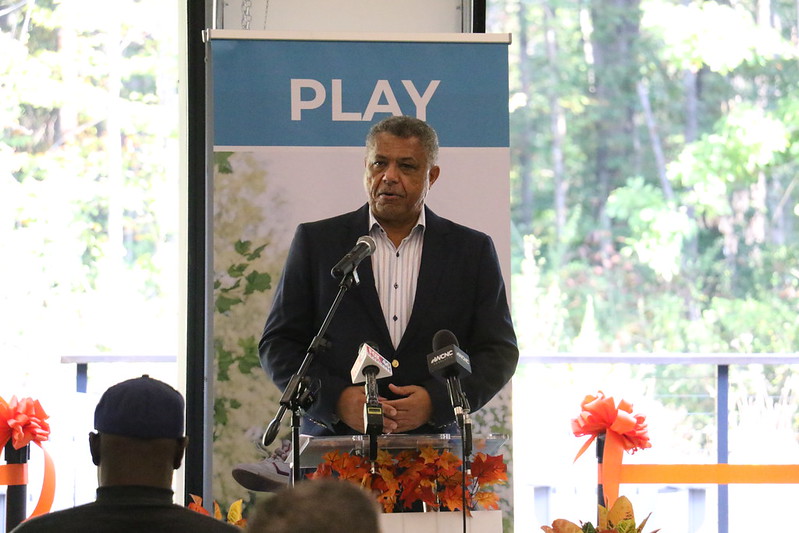
Managing more than 230 parks over 22,000 acres is a tall order. Catching up with the man tasked with such a charge is no small feat, either. Lee Jones has been part of Mecklenburg County Park and Recreation for nearly 20 years; serving as director for the last three plus years. Partners for Parks had the opportunity to sit down with him as he and his team wind down the summer season and ramp up for fall.
In a jam-packed 30-minute interview, Jones touched on the long-term impact of the pandemic, future challenges for parks and green spaces, and the project that’s most personal to him. Our conversation is below, edited only slightly for clarity. Enjoy!
Partners for Parks: First, thank you again for taking the time! It’s been quite a while since we’ve had the chance to get together. How have you been?
Lee Jones: I’m doing good! It’s just busy. It’s never a dull moment. This is our busy season, of course, and people really want to get outside more this time of year. And our music series, you know it’s been very popular, too. There’s a whole lot that we’re doing!
Undoubtedly, it’s been an interesting last couple of years. And at the peak of the pandemic parks were the only places that people could go and do anything, really. Do you think that experience that we all shared has changed people’s opinion about the significance that parks and green spaces play in our lives?
Absolutely! It’s gotten a lot more positive. And people really appreciate the public recreation amenities that Mecklenburg County offers. I can’t even begin to tell you.
But we went through a dark period right after October when we had to systematically start to limit the ability of people to have mass gatherings and use social distancing. We had to close the playground equipment we had to close the tennis courts, we had to close the parking lots… but we never ever closed the parks. We never, ever stopped people’s access to a greenway because we wanted them to still have these experiences. And I think they discovered that our recreation facilities here are very special.
And during that time, Park and Recreation staff remained on the job to keep the parks open for us. Do you think they ever really got the credit for that?
That was a very delicate thing right there. I even sat down in one of our cabinet meetings with the County Manager and I said, “I’m not trying to sound like a stepchild or anything here, but you know, we’ve stayed open. We’ve even opened our recreation centers to provide daycare for first responders and people who are required to provide a mandated service. Even though we’re not providing a mandated service, we’re providing a necessary service. My employees are out there doing things for other people’s kids that they’re own kids aren’t experiencing. That’s a heavy lift.
And in the end, I have to say, management was there for us, too. They did acknowledge our staff on that. And that’s not for me. It’s not for Lee Jones at all, because Lee Jones is nothing without the support of this staff to make things happen.
What do you think may be some of the biggest challenges that the Park and Recreation is going to face coming up?
We have about a hundred people moving here every day. That’s a lot of folks. We have a finite amount of land area here in Mecklenburg County and the county is not getting bigger land-wise. So to meet their standards for providing parks and recreation amenities is also going to be a challenge. But our biggest challenge is people really like Charlotte. I moved here, I bought a house here 19 years ago, and I love the place. I never thought I would like it as much. I love the place and I want to stay because it’s got so much to offer. So I know other people want to stay here.
Let’s talk about the Meck Playbook. You wrote in there that it’s a, “vision of where we want and need to go.” What does that mean, and what do we need to do to get there?
First, we need access. We need to make sure that people have access to our facilities. And because of the way that Charlotte was developed over the years with a series of cul de sacs and neighborhoods around a bunch of streams and tributaries that literally radiate from the center of the county, it’s difficult.
I mean, you can have a park that’s literally a five-minute walk away, but because of the road network, it’s going to take you 15 minutes on foot to get there because you got to come out of your neighborhood. You got to walk down the main street, get on another street. So that’s one thing, just working with the access and what we can do to enhance that.
Second is the availability of land to be able to build facilities, particularly in our challenged and underserved communities, those communities that are mostly seniors, mostly black and brown residents, that did not receive adequate investment in the past. And how do we address that?
Then through the next lens, which is equity, we need to make sure that you don’t have “nice” parks and “bad” parks. You have to have all the parks at the same level in terms of accessibility, in terms of maintenance, and in terms of amenities that they offer. So every park is a good park. And finally, being able to inform people as to what’s out there, and to evolve and grow in that respect.
One of the things that was very significant about the Playbook was the amount of public input that went into it. Was there anything there that surprised you?
It did. And one thing was that we previously made an assumption that people like to hear about things just through social media, but we were looking at the kind of response we were getting, and who was showing up to events. What we found was that there are a lot of people that want to write things down. They want cards, things mailed to them, and phone calls. They want someone to knock on their door to get their input.
Now, now, don’t get me wrong, social media is still the top way that many people weigh in on things. What we’re seeing on Facebook, Instagram, Twitter, all of that, and email and text messages. But we’re also looking at ways, instead of having people come to our offices or come to a rec center… let’s go to a farmer’s market, let’s go to a concert, let’s go to a church event where we know a lot of people are going to be there. Let’s set up a little booth and ask questions. That’s proven to be very successful for us.
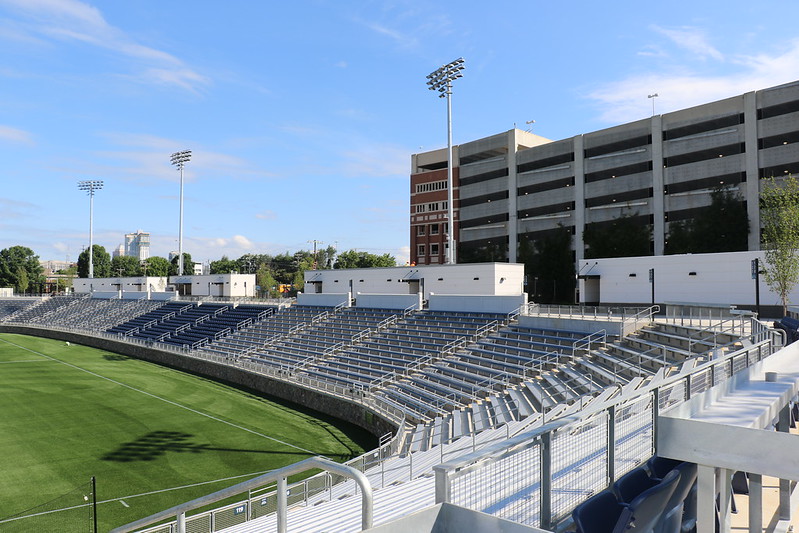
So you’ve been with Mecklenburg County Parks for almost 20 years now. You’re going on year four as the director. In just the last little bit, Memorial Stadium has reopened with an incredible renovation. Two regional rec centers have come online. Miles of additional Greenway added, including an incredible partnership with the City and the cross Charlotte trail … and that’s just the tip of the iceberg, so to speak. What would you say might be the most significant or one of the most significant project that has taken place?
American Legion Memorial Stadium has been an icon. I first got to really see it back in 1985 for a fireworks show. It was really dark in there at night, and I went to the bathrooms and they were awful. I had come back from a study abroad in 1982, and it reminded me of the Roman Coliseum. It was in failing health, they had all sorts of braces and things up … And so from that point forward when I came in as the director of Capital Planning for Mecklenburg County in 2004, and I started looking at the things that we needed to do and that was one and I could never get the funding for. We tried all these different partnerships and then I was in a meeting with the county manager and as the head of capital planning and was asked, “what would you do if we had the money?” I said I think we should fund it. The county should pay for it so we’re not locked into a partnership with anyone who could control the use of the facility. And then the next thing I know, about a year or so later, I have that opportunity to be the director.
I’m very pleased with how it came out. I would say it was personal because I’ve always been a person for adaptive reuse and saving history because if you don’t learn from history, you miss great opportunities to enhance development and take pride in yourself… That was part of the Works Progress Administration program that build that facility. Franklin Delano Roosevelt, who went to my high school actually came here to see it, so that has a lot of symbolism for me.
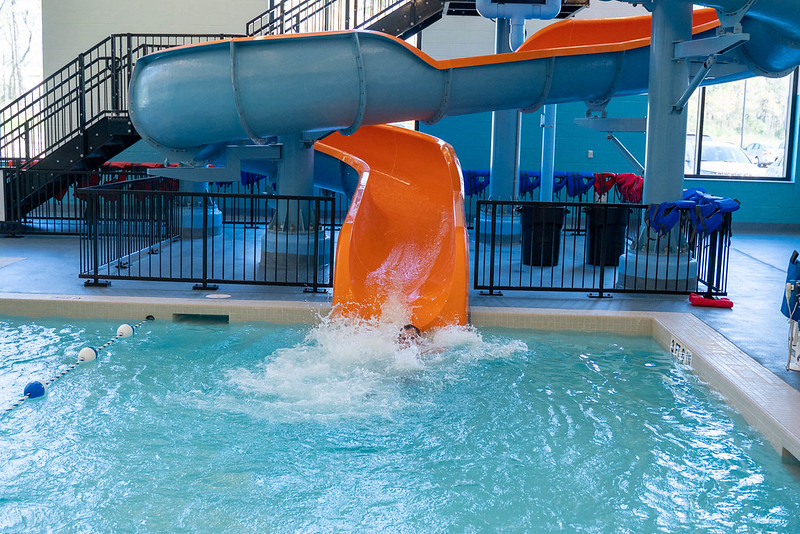
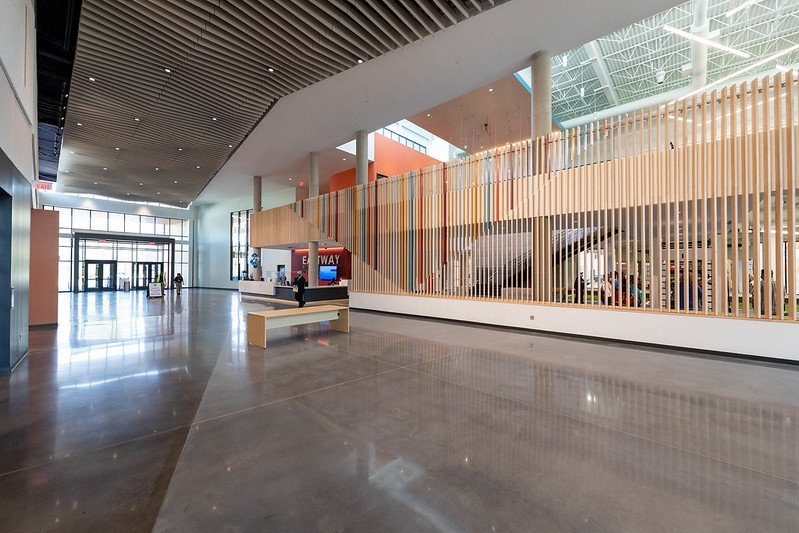
Our regional recreation centers, Eastway and Northern Mecklenburg County, are significant major big-time projects that the County has built. They’ve been very successful. Eastway has taken off and now we’ve got Northern open. And every time I’ve gone up there and I’ve been up there in the last month about three times, it’s packed. Seniors love it. Everybody loves it. We’re going to be very strategic as to how we do the next two and get the support for those and maybe we change the criteria a little bit.
And finally, taking care of some of the parks that we have like Pearl Street Park. That park was the only park that African-Americans could really go to. And then the people from Second Ward High School; they would march there every day from the Second Ward Gym at the Aquatics Center over to that park or athletic field. So they didn’t have fields. That’s the one place they had. So that became a legacy, that became a gathering place. It became a node for that aspect that that portion of our population, the African-American population that lost everything during renovation in the late sixties, that was driven by economic development.
And then the final link, the capillaries of the body that link the organs of the Mecklenburg County Park and Recreation System together is our Greenway network. And that partnership with the city of Charlotte, with the Carolina Thread Trail, and with our partners in the other six incorporated municipalities is making that possible for people to have a wonderful transportation network and recreation amenity that holds the county together and connects it.
Thank you for your leadership and the partnership, and thank you for the time, Lee!
Thank you so much!
# # #


News You May Be Interested In
Around the Crown 10k Completes Another Loop for Partners for Parks
After more than a year full of delays and transitions, and hopes and fears of “when” or “if” it could actually happen, Around the…
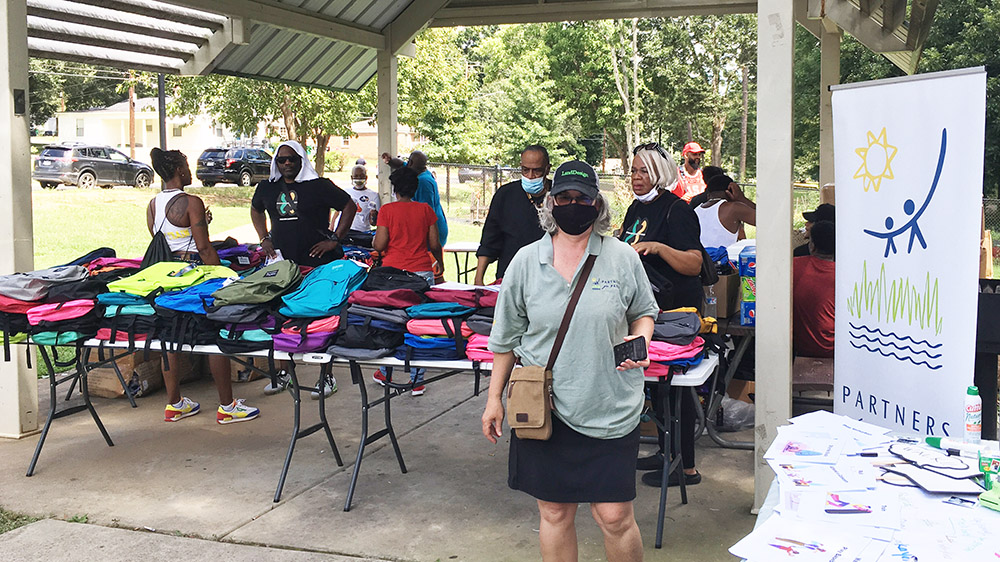
2021 Projects
In 2021, Partners for Parks has doubled down on its commitment to equity and access in the region’s parks. We have actively looked…
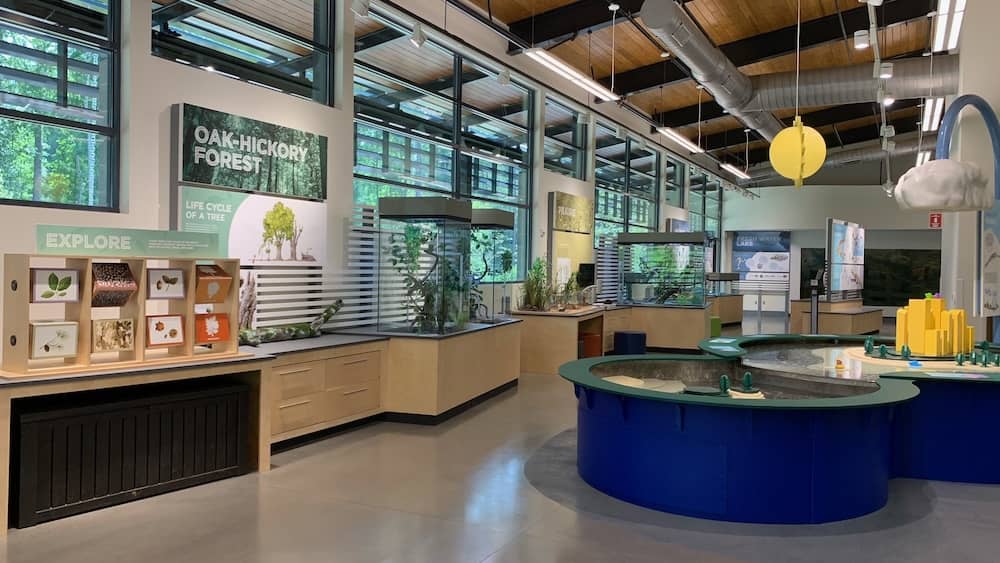
“Quest” for Nature Education Brings New Center at Latta Preserve
Journey into the world of water at Mecklenburg County’s newest nature center, aptly named Quest, as the county’s nature centers…
Partners for Parks Partners for Change in Lincoln Heights
On a hot day in August, no kid wants to think about going back to school. Yet hundreds of children came to Lincoln Heights Park on…