
The Hornets are rolling again! If you’re an NBA fan, you probably think we’re talking about the Charlotte Hornets, whose rookie, LeMelo Ball, has brought new energy and — shall we say it — “buzz” to the team. But you’d be wrong.
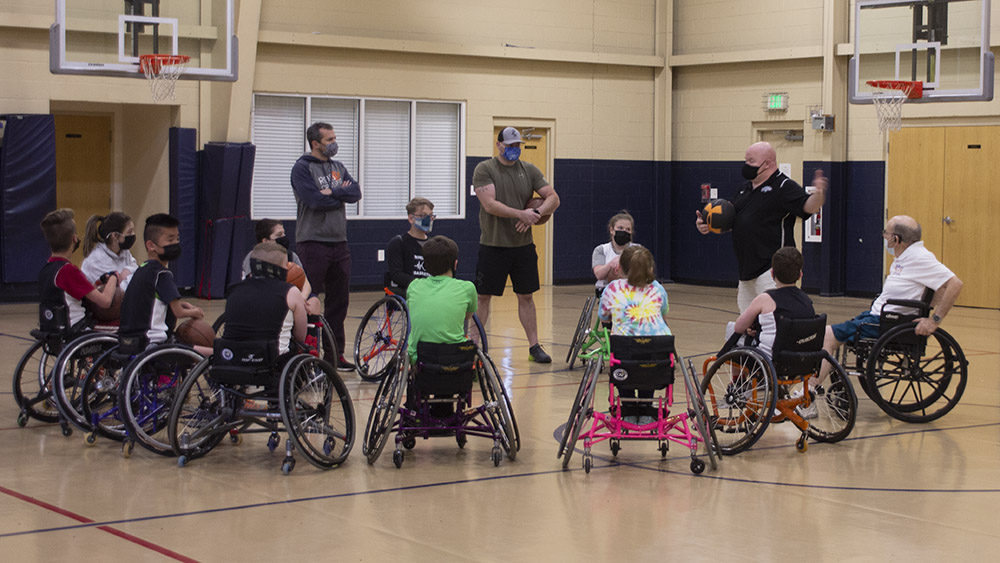
The Hornets that are really rolling now, after COVID closed down their longstanding practice courts, are the Rollin’ Hornets youth wheelchair basketball team. This pride of adaptive sports in Charlotte — which includes a recent national championship team — is together again, preparing for tournaments, in their first home in nearly a year.
Practice courts for the wheelchair athletes have been hard to find during COVID, and the team has jumped around from their longstanding home at a Charlotte-area church, to an old YMCA in York County, SC, that was sold, to…. nowhere. But thanks to Partners for Parks Chairman Doug Youngblood, they’re together again at Central Steele Creek Presbyterian Church.
“We need to help folks understand how important this is to the kids,” says Youngblood. “They need some champions to help them.”
Despite the name, Rollin’ Hornets are not sponsored by the Charlotte Hornets. They do have rights to use the name and branding rights to use a logo designed by the Charlotte Hornets, but all money for special chairs, equipment, tournaments, and uniforms are raised by team members and parents. The chairs can range from $1,500 to $4,000 apiece. The team owns several, and issues them to players so they can get used to maneuvering them. Some kids get help from grants. When youngsters outgrow their chairs, they pass them on to younger players, or donate them to other teams.
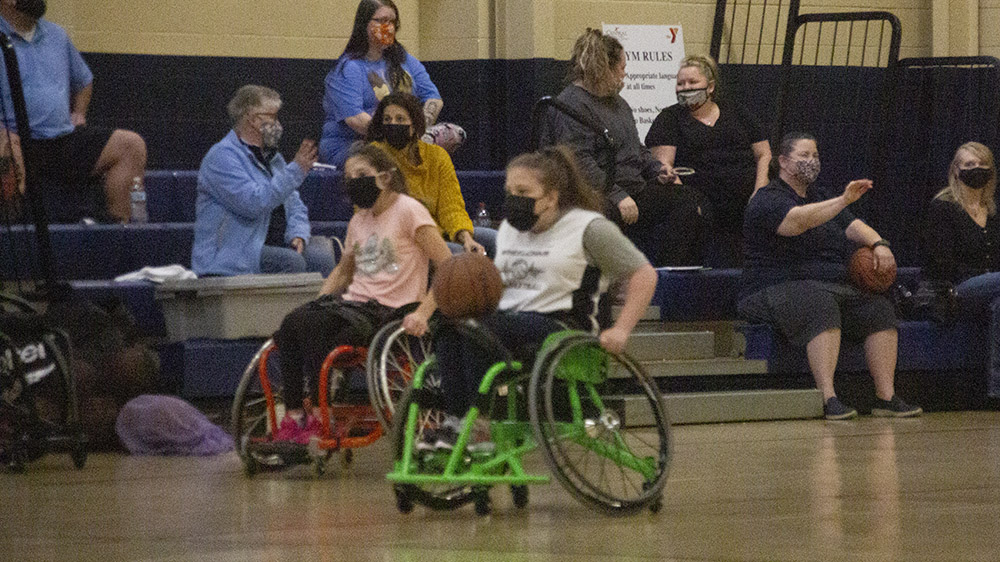
Partners for Parks has awarded scholarships for the team’s tournament — a big source of revenue — for the past several years, but the Rollin’ Hornets couldn’t host one this year. Partners for Play, a partnership between the U.S. Play Coalition and Partners for Parks, is helping support the team. Officially, Rollin’ Hornets fall locally under the Abilities Unlimited umbrella, which includes a number of adaptive sports.
Partners for Parks has recognized the outstanding work done by the Rollin’ Hornets more than once, too. The Rollin’ Hornets earned Partners for Parks’ Nonprofit of the Year Award in 2017, and longtime coach Mike Godsey was recognized with its Volunteer Service Award in 2019.
But expenses were just one of the obstacles this year. Losing their home court meant more than just giving up practice time — it meant teammates lost valuable together time with some of their closest friends and allies who rely on wheelchairs.
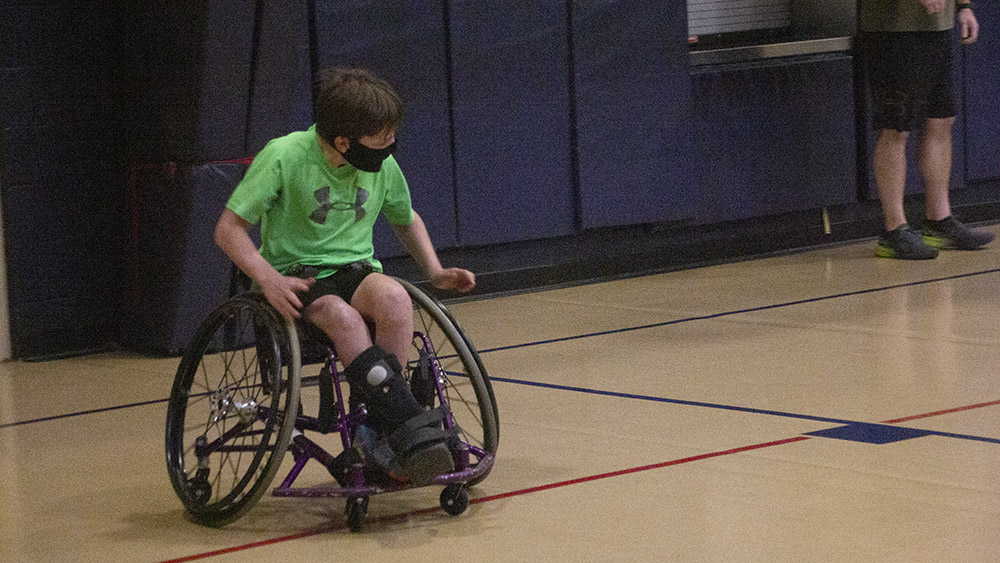
“It’s very important for the kids. They don’t have too many things they can do with friends, socially and recreationally,” says Youngblood. “We believe kids need a social outlet, and it’s part of their education to learn how to get along with other kids. The team encourages their growth mentally, physically, and psychologically.”
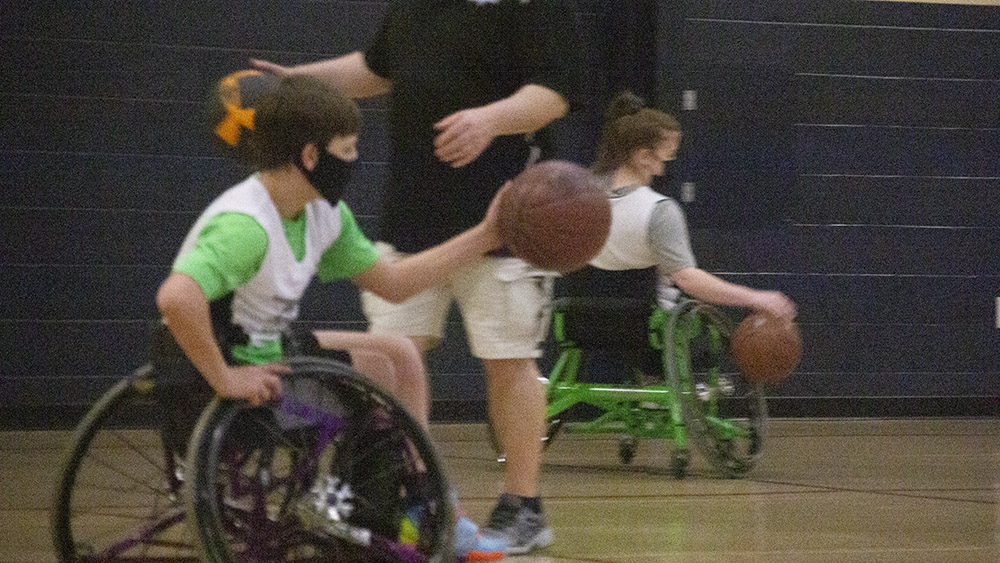
You can see the athleticism of players like 11-year-old Cameron Ruis, who is in his 8th year with the Rollin’ Hornets. Yes — he started when he was 4. Cam was born with spina bifida and relies on a wheelchair because the condition paralyzed his legs. But on the court, he swings his specialized chair around and handles the ball like a pro. His mom, Sheri, says playing basketball is what Cam lives for.
“It’s more than basketball, it’s community,” says Sheri. “He’s grown as a person, he’s more confident — this is his opportunity to play a team sport.” It’s also a support group for parents, who help each other out when they need a shoulder or a referral. Coaches make sure the players know basketball is a privilege and they need to make good grades and respect parents and teachers to stay involved.
Cam is in gifted English and math classes at Marvin Ridge Middle School, where he is the only student using a wheelchair. He set his goals high: to play in college. A handful of schools offer intercollegiate teams, and 22 Rollin’ Hornets have earned spots to play on college teams while pursuing higher education. At least 50 players have been recognized for academics, including Academic All-American. Playing a sport has led many more to a better life, in and out of school.
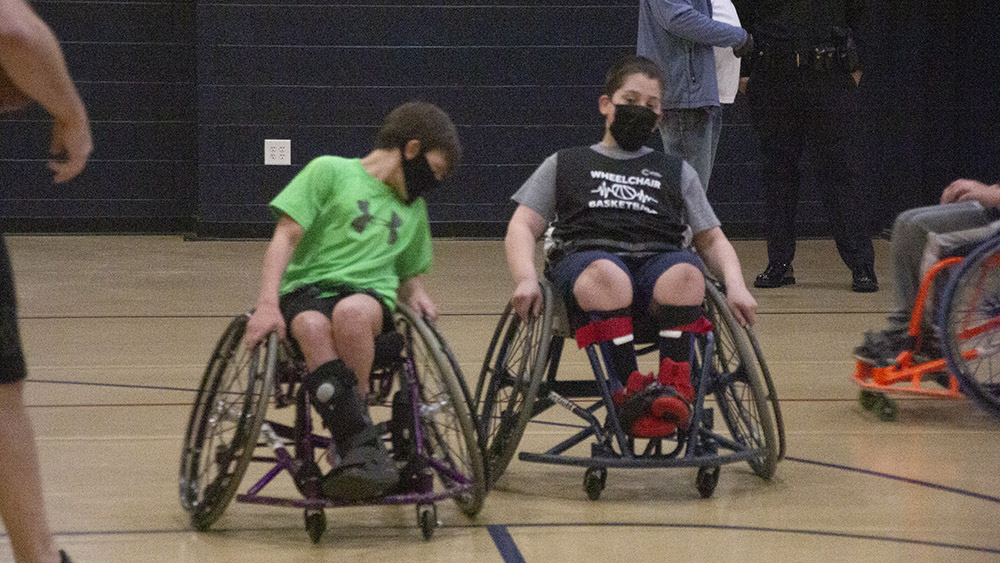
Families sacrifice a lot to make it happen. There are only 2 teams in the Carolinas — Charlotte, and a smaller team in Greenville, SC. That means that to compete, families must travel hours to other states, stay in hotels, pay for meals, and incur expenses. There are no “local” games each week. Players drive from as far away as Charleston and Columbia, SC, for weekly practices. The sacrifice is worth it, says Sheri Ruis.
“I’ll drive anywhere,” she says. “It’s hard to put into words. A lot of them are the only wheelchair users in their school. Here they’re not different because everyone’s in a chair.” It’s not just about sports. It’s about life.
There are different levels depending on players’ ages: 3 Adult leagues for 18 & over, a Women’s team, Varsity for 14 – 17 (high school), and Prep Teams for children 13 & under. Adults have found a home in Huntersville until mid-June, which will help them practice until the national tournament; then they’ll need a new court. Sometimes groups practice together to up their game, and share court space — but there’s no way to fit in the hours they need with the limited space they have. It’s frustrating for parents and coaches.
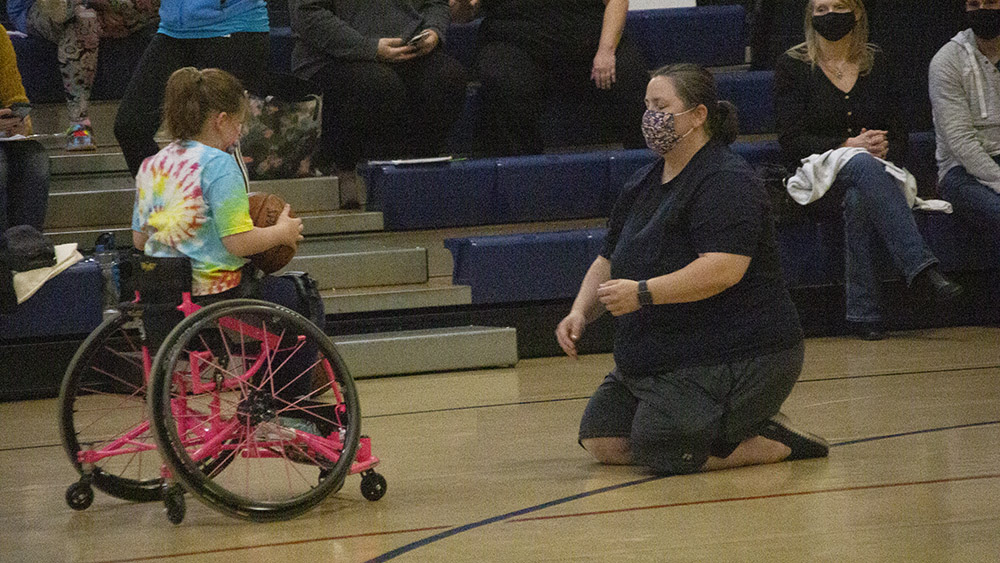
“This is one of the largest teams in the country, but nowhere near as big as it could be,” says Coach Godsey. “People just don’t know it exists.”
Godsey was involved early, when doctors encouraged his son, who has cerebral palsy, to be more active. His son aged out of the program long ago, but Godsey stayed as his commitment to the team grew. He found a more flexible job and founded a nonprofit to devote more time to the players. All coaches, including him, are volunteers.
“It’s the emotional, mental, and social aspect that is the biggest impact for the kids,” says Godsey. “They are in a population, with their disabilities, of being isolated in everyday life.” Finding a way for the kids to get together to practice and play is imperative. Landing the court at Central Steele Creek Presbyterian Church for 3 hours every Monday night is a Godsend.
“It’s a huge relief to us from that perspective,” he says.
The relief is palpable from Sheri Ruis, too. Parents chatted happily at their first practice in their new home. They smiled and cheered when players made good shots. They hope a permanent situation is worked out. For now, this is good.
“It makes my heart happy for them,” she says. “It’s been a long year. This is a safe place and a happy place.”


News You May Be Interested In
County’s Budget is Good News for Parks
Mecklenburg County Commissioners vote to invest in parks and green spaces with the approval of the County’s Capital Improvement…
Connectivity Continues with Greenway Extension
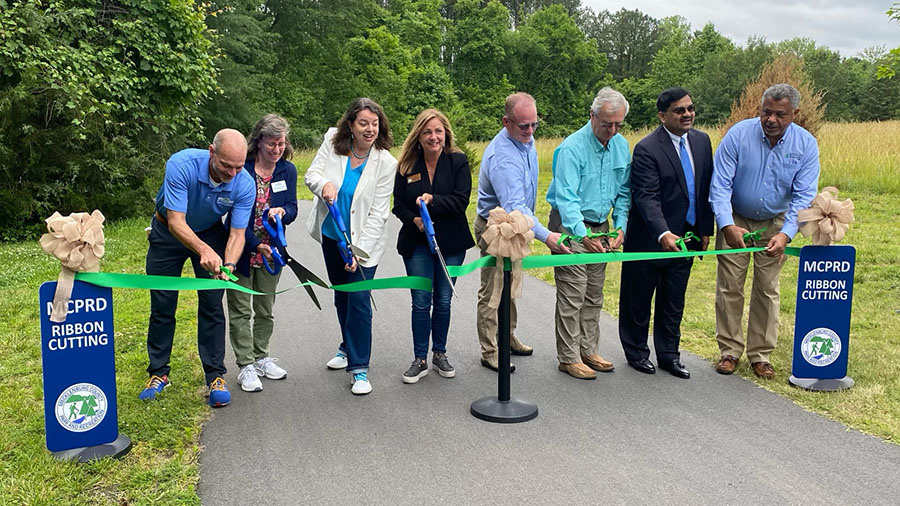
It’s official! Mecklenburg County’s Little Sugar Creek Greenway now reaches all the way to the South Carolina State line. Partners…
Learn to Ride Returns
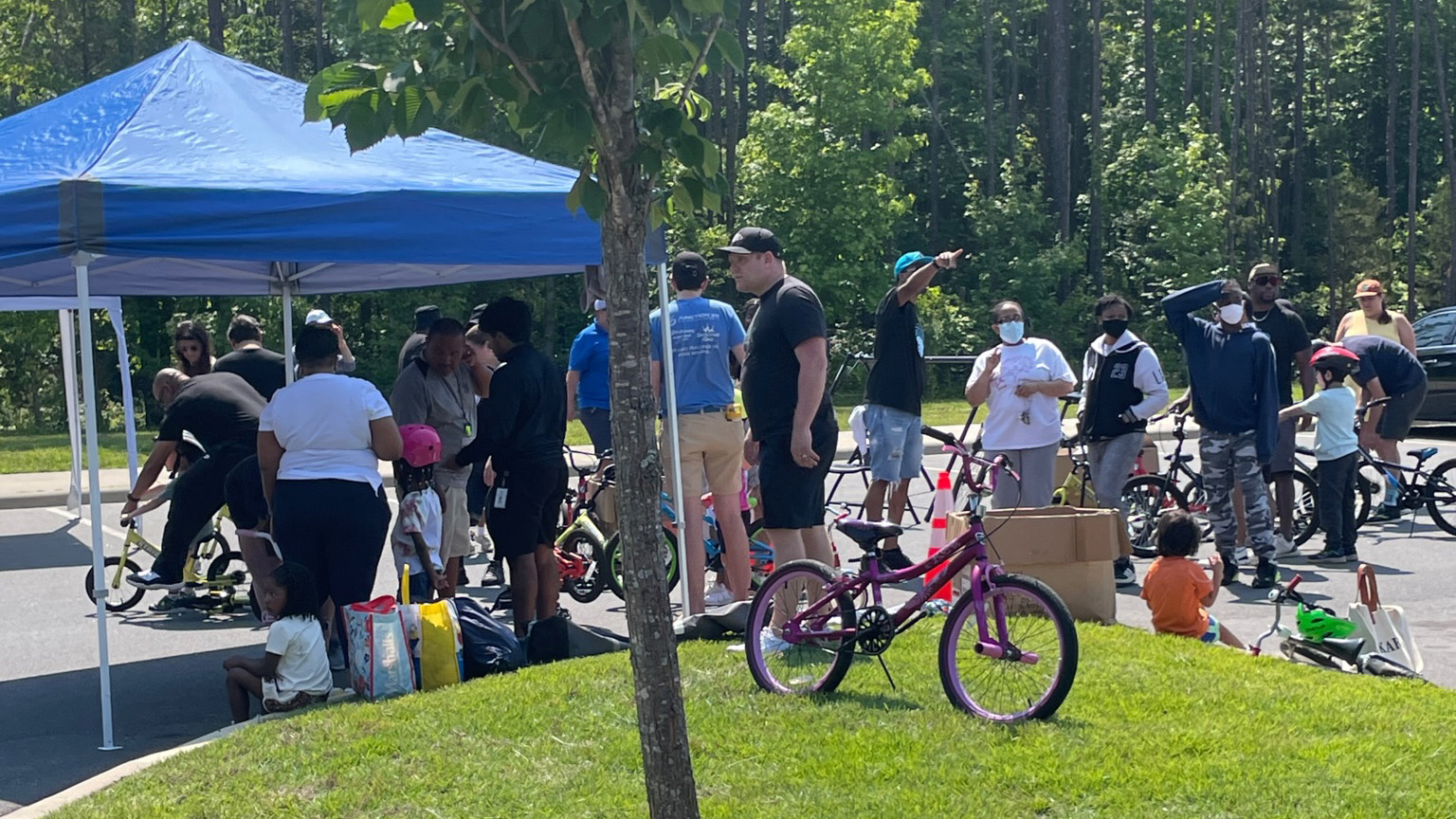
Riding a bike is a life skill. And as some skills go, it’s one not everyone has aptitude for or access to. The Learn to Ride…
Go West for Some Outdoor Fun
There’s plenty to do outside this time of year! From outdoor festivals, tours, and events, to picnics, hikes, and strolls along…
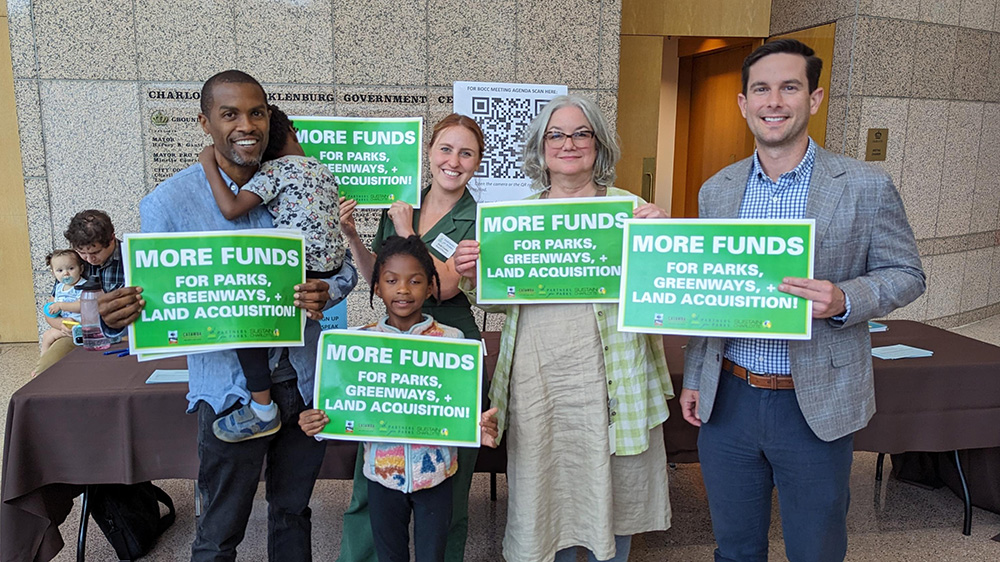
Advocacy for More Parks and Recreation
Beth Poovey, President Hi I am Beth Poovey, President of Partners for Parks. We are an all-volunteer board, from all over the…
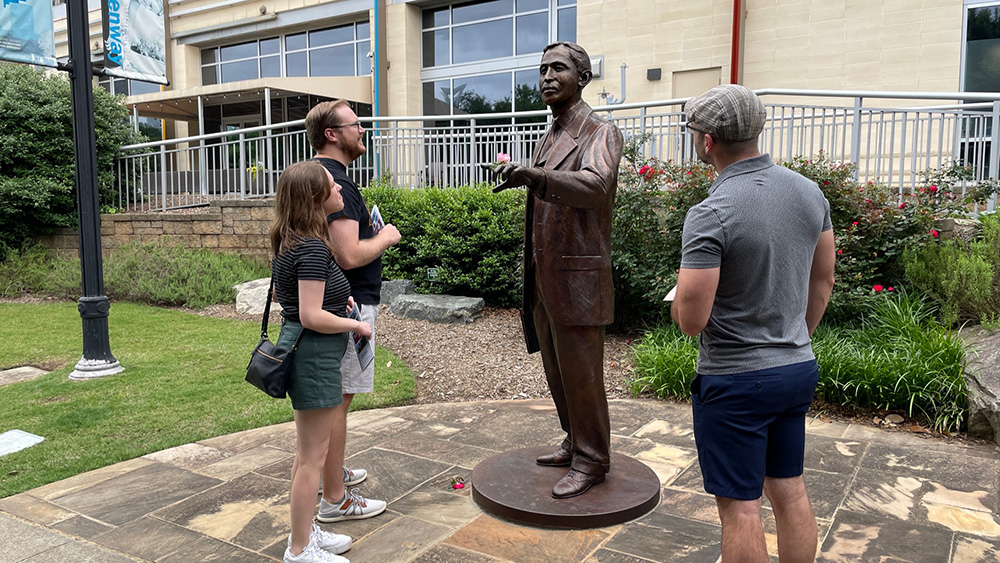
Charlotte Trail of History Festival
In a city brimming with history – and equally famous for paving over it – the Charlotte Trail of History and Mecklenburg County…